Archives
Category: Uncategorized

Japan - Southeast Asia
May 2020 — April 2021A Diplomatic “New Normal” in the Indo-Pacific Region?
Japan-Southeast Asia relations were relatively stable, despite COVID-19, as summarized by three trends: emphasizing multilateral actors; prioritizing enhancement of bilateral relations with two countries (Indonesia and Vietnam); and the synthesis of Japan’s Free and Open Indo Pacific “vision” (FOIP) and ASEAN’s ASEAN Outlook on the Indo-Pacific (AOIP). Japan and Southeast Asian states managed to achieve tangible cooperation, as illustrated by the establishment of the ASEAN Centre for Public Health Emergencies and Emerging Diseases (ACPHEED). Yet, strategic dynamics among Southeast Asia, Japan, and the United States are shifting because of changes in Japanese and US political leadership. Japan, the most reliable partner for Southeast Asia in the Trump era, seemingly faced a relative decline in the importance attached by Southeast Asia because of the United States’ renewed commitment to the region. In the context of this new diplomatic reality, the foremost challenges that Japan and Southeast Asia will likely face in 2021-2022 are Myanmar and ASEAN Centrality in the Indo-Pacific.
Regional Overview
September — December 2020Multilateralism (Still) Matters in/to Asia
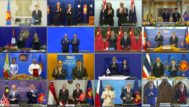
The last trimester of the year saw its usual flurry of (albeit virtual) multilateral summitry, with most coming after the US election. While outgoing US President Donald Trump did “attend” the Asia Pacific Economic Cooperation (APEC) Leaders Meeting (for the first time since 2017), he was, as usual, a no-show at the ASEAN-chaired gatherings, with the US being represented at the US-ASEAN Summit and at the more important (at least to the other participants) East Asia Summit, for the second straight year, by National Security Advisor Robert O’Brien. Secretary of State Mike Pompeo did attend, in person, the Quad Foreign Ministers’ Meeting in Tokyo in October, with the four navies meeting later in the year for their first four-way exercise in India. Pompeo also attended (virtually) the US-ASEAN Ministerial but left the participation in the broader-based ASEAN Regional Forum to Deputy Secretary of State Steve Biegun.
US - Japan
September — December 2020Leadership Transitions in Tokyo and Washington
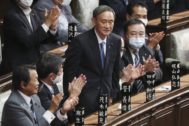
2020 brought a global pandemic, economic strain, and, in both the United States and Japan, leadership transitions. COVID-19 came in waves, smaller to be sure in Japan than in the United States, and each wave intensified public scrutiny of government. Neither Tokyo nor Washington held up well. Public opinion continued to swing against President Donald Trump, increasing his disapproval rating from 50% in January to 57% in December following the US presidential election. Prime Minister Abe Shinzo also suffered a loss of confidence. His disapproval rating grew from 40% in January to 50% in July, cementing his decision to step down on Aug. 28, ostensibly for health reasons.

US - China
September — December 2020Joe Biden is Elected President Amid a Plummeting US-China Relationship
In the final months of 2020, the Trump administration took a dizzying number of measures aimed at accelerating economic decoupling, curtailing Chinese Communist Party influence activities in the US, punishing Beijing for undermining Hong Kong’s autonomy and carrying out human rights abuses in Xinjiang, and strengthening ties with Taiwan. The US even attempted to ban TikTok and WeChat from the US market. China took its time, but finally congratulated Joe Biden and Kamala Harris on their victory in the US presidential election. Both the US and China launched their COVID-19 vaccination campaigns. A new dialogue was launched between US and Chinese militaries on crisis communications, but the PLA later refused to attend an annual meeting of a longstanding mechanism on operational maritime safety.
US - Korea
September — December 2020Resetting Relations Will Require True Grit
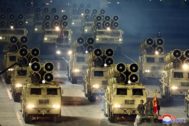
After a months-long wait to see who would lead the US from 2021, both South and North Korea got an answer in November: Joe Biden. South Korea moved to forge ties with the incoming US administration, relieved at the prospect of a more conventional White House, yet anxious for it to adopt an approach to North Korea congruent with that of the Blue House. North Korea has stayed mum on Biden’s victory, reflecting its poor relations with the former vice president, a pause to recalibrate diplomatic expectations, and domestic issues that overshadow foreign policy in Pyongyang. The latter point is fitting, as it is also true of Washington. The early days of the Biden presidency will see domestic focus due to the COVID-19 pandemic and vaccine rollout, economic recovery, and the need to try to heal political and cultural divisions in the United States. That said, neither Korea can be neglected for long.
US - Southeast Asia
September — December 2020Waiting on Washington: Hopes for a Post-Election Boost in Us Relations
The resurgent COVID-19 pandemic and US elections constrained the conduct of US relations with Southeast Asia and of regional affairs more broadly in the final months of 2020. Major conclaves were again “virtual,” including the ASEAN Regional Forum, the East Asia Summit. and the APEC meeting. Over the year, ASEAN lost considerable momentum because of the pandemic, but managed to oversee completion of the Regional Comprehensive Economic Partnership (RCEP) in November. Some modest gains in US-Southeast Asian relations were realized, most notably extension of the US-Philippines Visiting Forces Agreement (VFA) for another six months, an opportunity for Manila and the new administration in Washington to put the VFA—and the US-Philippines alliance more broadly—on firmer ground. Another significant step, albeit a more controversial one, was the under-the-radar visit to Washington of Indonesian Defense Minister, Prabowo Subianto, in October.
China - Southeast Asia
September — December 2020Beijing Hails Regional Integration, US Seen Sidelined
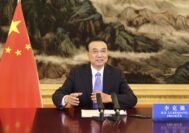
China faced a less forceful US posture in the South China Sea in this reporting period compared with earlier in 2020. Beijing took advantage of President Trump’s failure to participate in the East Asian Summit (EAS) and other ASEAN-led meetings in November. Chinese leaders depicted the United States as disruptive and out of step with what Beijing saw as an overriding trend toward regional economic integration and cooperation. They highlighted the Regional Comprehensive Economic Partnership (RCEP) agreement and ASEAN’s new prominence as China’s top trading partner, forecasting stronger regional economic growth led by China’s rapid rebound from the COVID-19 pandemic. Beijing remained on guard against US challenges, and it resorted to unprecedented trade retaliation and related diplomatic pressures to compel Canberra to change its recent moves to check Chinese interference in domestic Australian affairs, expansionism in the South China Sea, repression in Hong Kong and Xinjiang, and malfeasance in the initial handling of the COVID-19 outbreak in China. Some experts were optimistic that the Philippines and China were on the verge of agreeing on joint exploitation of oil and gas in South China Sea areas claimed by both countries, but others remained skeptical.

China - Taiwan
September — December 2020Overcoming COVID-19, Navigating US–China Tensions, and Anxiously Awaiting a New US Administration
Taiwan’s successful management of COVID-19 infections and the pandemic’s economic impact has elevated Taiwan’s international profile and President Tsai Ing-wen’s already high domestic approval ratings, but did little to ameliorate Taiwan’s confrontation with mainland China. Growing US–China economic and security tensions have continued to swirl around the island. Chinese air and naval forces have increased intimidation operations around Taiwan, with the Chinese media threatening that People’s Liberation Army (PLA) aircraft might even overfly the island. Taiwan has committed to increasing its defense budget and upgrading its reserve forces, and the US approved a series of military sales that are more closely aligned with Taipei’s porcupine strategy than some earlier high-profile sales. Taiwan’s IT companies have struggled to preserve their production base in China, while assuring the US that they would not contribute technology to US-sanctioned Chinese companies. They also opened facilities in third countries and the US in order to ensure US market access and political support.
Tsai’s decision in late August to allow imports of US pork treated with ractopamine was intended to reopen negotiations with the US on a bilateral trade agreement and it was driven by a strategic calculation that closer economic ties with the US would advance the island’s economy and security. That move caused a storm of domestic opposition, led by the Kuomintang (KMT) but with no response from the US Trade Representative, a combination that risks undermining the initial successes of her second term in office. The election of Joe Biden caused anxiety in Taiwan that the new Democratic administration, in an effort to reduce tensions with China, might be less supportive of Taiwan than President Trump has been.
North Korea - South Korea
September — December 2020Fire on the Sea, No Balloons in the Sky
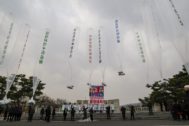
Inter-Korean relations, still formally in abeyance, were dominated in September and October by a mysterious and tragic incident in the West Sea. A Southern official went missing from a survey vessel and ended up in Northern waters—where he was shot and his body burnt. Kim Jong Un apologized, sort of, and Seoul revealed that he and Moon Jae-in had earlier privately exchanged pleasantries—but neither this, nor Unification Minister Lee In-young’s ceaseless calls for aid and cooperation, cut any ice in Pyongyang. Meanwhile Kim launched a campaign to eradicate Southern slang among Northern youth. In December Moon’s ruling party passed a law to ban propaganda balloon launches across the DMZ, prompting widespread criticism but earning no praise from the North. At a big Party Congress in January, Kim lambasted the South in shopworn terms, withdrew his “goodwill,” and said the ball is in Seoul’s court. For good measure, his sister Kim Yo Jong called South Korea “weird.” Despite Moon’s dreams, the 2018 peace process is over, with scant prospects of renewal.
China - Korea
September — December 2020Strategic Dilemmas, Clashing Identities, and Free Trade
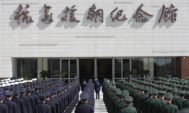
PRC State Councilor and Foreign Minister Wang Yi’s November visit to Seoul produced limited substantive results while signaling Beijing’s deeper strategic intentions toward the United States’ Asian allies. China’s commemorations of the Korean War’s 70th anniversary in October provided reassurances to North Korea while triggering a war of words with South Koreans, ranging from the foreign ministry to the K-pop group BTS. On social media, the history controversy was a prelude to wider cultural clashes on a host of issues. While the repercussions of COVID-19 and US-China trade tensions challenge China and South Korea’s economic agenda, the Regional Comprehensive Economic Partnership’s signing in November raised prospects for regional multilateralism. Meanwhile, North Korea’s self-imposed quarantine resulted in a precipitous drop in North Korean imports from China according to China’s official trade statistics. UN Panel of Experts-led monitoring of North Korean off-the-books exports of coal and sand to China drew harsh US criticisms and catalyzed the announcement of a US Treasury-administered rewards program for reporting on primarily Chinese entities engaged in illicit trade with North Korea. Coupled with the incoming Biden administration’s envisioned regional architecture and the campaign’s declared reliance on multilateral approaches to North Korea, Asia’s multilateral initiatives may heighten Seoul’s US-China dilemma.