Archives
Category: Uncategorized
Regional Overview
September — December 2019Most Questions Remain Unanswered As 2019 Stutters to a Close
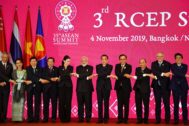
The final trimester of the year is usually a time for Asian multilateralism to take center stage; this year, not so much. The Asia Pacific Economic Cooperation (APEC) Leaders Meeting, which was supposed to take place in Chile, was cancelled (due to civil disturbances in the host country) while the East Asia Summit (EAS) proceeded without either US President Donald Trump or Vice President Mike Pence (his normal stand-in) in attendance. Regional economic developments (and US trade actions impacting the broader Indo-Asia-Pacific region) grabbed the headlines instead. Regional Comprehensive Economic Partnership (RCEP) participants gathered along the EAS sidelines to finalize their trade agreement, sans India, which balked at the last minute. Meanwhile, the White House and US House of Representatives, while locked in a battle over impeachment, nonetheless reached common ground on the US-Mexico-Canada Trade Agreement (USMCA) while the administration announced a “phase one” trade deal with Beijing. There appears to be less than meets the eye in both agreements, but each impacts the region writ large. Finally, not to be overshadowed, the State Department issued its own explanation of the Free and Open Indo-Pacific (FOIP) strategy, complementing the Pentagon’s version, which was analyzed in our last issue.
US - Japan
September — December 2019The Finale for Abe-Trump Alliance Management?
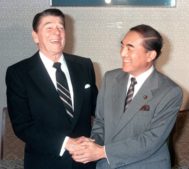
The highlight of 2019 was undoubtedly the US-Japan trade deal. It was two years in the making, but in September, Japanese Prime Minister Abe Shinzo and US President Donald Trump concluded their much-anticipated trade agreement, ending a worrisome source of dissonance in the relationship. Two focal points characterized this first step in resolving trade frictions: market access in Japan for US agricultural goods and a new set of rules for digital trade. However, Abe got some pushback at home, and the Trump administration cautioned that this was just the first step to redressing the deficit.

US - China
September — December 2019“Phase One” Trade Deal Reached, But Unlikely to Defuse Tensions
The US and China reached a “phase one” trade deal that includes low-hanging fruit and postpones contentious issues. Sources of friction in the bilateral relationship included President Donald Trump’s signing into law the Hong Kong Human Rights and Democracy Act, US Navy operations enforcing freedom of navigation in the South China Sea, US support for Taiwan, and China’s arbitrary detention of Xinjiang Uighurs in internment camps. A tweet by the NBA’s Houston Rockets general manager supporting protesters in Hong Kong triggered an unexpected controversy. Top US and Chinese defense leaders met on the margins of the ASEAN Defense Minister’s Meeting-Plus in Bangkok and a joint humanitarian rescue and disaster relief exercise took place in Hawaii. The US continued to take measures to crack down on Chinese espionage.

US - Korea
September — December 2019Gaps Widen, Tensions Rise
US footing on the Korean Peninsula grew less firm as both Koreas resisted moves by Washington. The initial White House call for an increase in annual South Korean host-nation support (HNS) for US Forces in Korea to $5 billion was met with incredulity among the Republic of Korea’s officials and public. By yearend, there were media reports of a lowering of the US ask and agreement by Seoul to arms purchases, but the challenge of finalizing the Special Measures Agreement (SMA) and a residue of resentment remained. Seoul, too, was unhappy with Washington’s lack of progress with Pyongyang, a foil to President Moon Jae-in’s peace ambitions.
North Korea raised its stakes higher, rejecting diplomatic overtures by the United States and its “hostile policy,” disregarding curtailment of US-ROK military exercises, and testing 27 short range ballistic missiles, as well as multiple rocket launchers and engines, between May and the end of the year. December saw activity at the once-decommissioned Sohae Launch Facility. At year’s close, Kim Jong Un declared abandonment of North Korea’s long-range missile and nuclear testing moratorium, expectations of continued sanctions and renewed “self-reliance,” and the promise of a “new strategic weapon.”
US - Southeast Asia
September — December 2019Engagement in Absentia? ASEAN Worries over Lack of US Attention
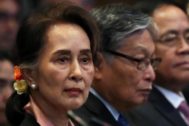
Stung by a US delegation to the East Asia Summit of lower rank than previous years, ASEAN leaders retaliated by presenting National Security Advisor Robert O’Brien with a partial boycott of the adjacent US-ASEAN Summit. The Trump administration brushed off the incident with a State Department fact sheet that began, “US engagement with the ten member states of ASEAN has never been stronger.”
China - Southeast Asia
September — December 2019Beijing Leads Regional Agenda, Rejects US Challenges
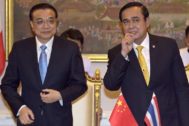
The annual heads of government regional meetings convened by ASEAN leaders in Bangkok, topped by the 14th East Asian summit on Nov. 4, saw Beijing’s leaders set the pace for slow-moving negotiations on a China-ASEAN Code of Conduct in the South China Sea. They also celebrated the conclusion of negotiations on the Regional Comprehensive Economic Partnership (RCEP), a trade accord that excludes the United States.
China - Taiwan
September — December 2019Election Portends Continued Tension
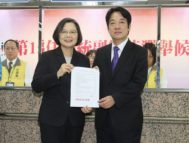
President Tsai Ing-wen triumphed over her populist Kuomintang (KMT) opponent Han Kuo-yu in Taiwan’s January 11, 2020 presidential election, garnering 57.1% of the vote to Han’s 38.6%. Tsai’s Democratic Progressive Party (DPP) also retained its majority in the Legislative Yuan (LY), albeit with the loss of some seats to the KMT and third parties. While there has been considerable attention to Beijing’s influence operations, the election illustrated Beijing’s limited ability to manipulate Taiwan elections. The outcome portends continued deadlock and tension in cross-strait relations in the coming months. Meanwhile, Taipei and Washington have strengthened ties by launching a series of bilateral and multilateral cooperative projects, intended in part to counter both Beijing’s influence operations and its continuing diplomatic, economic, and military pressures on Taiwan.
North Korea - South Korea
September — December 2019Still Nothing Doing
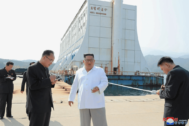
2019 was a bad year between the two Koreas, undoing advances made in 2018. North Korea eschewed contact with the South, while continuing with weapons tests, which the South finally protested in November. In a pattern of negativism, Pyongyang hosted (because it had to) a most unsporting inter-Korean soccer match. Both states were hit by swine fever, yet the North refused help from or to share data with the South. In a policy U-turn, Kim Jong Un told South Korea not to revive Mt. Kumgang tourism, but to come and take away its “shabby” and “ugly” facilities built there. Seoul’s stance on the North’s human rights attracted criticism. Yet President Moon Jae-in remained strangely upbeat. His New Year address reiterated a broad agenda for cooperation—whereas a big speech by Kim ignored the South completely. 2020 is unlikely to see any improvement.
China - Korea
September — December 2019Nuclear Weapons Cloud 70 Years of Friendship
North Korea conducted five rounds of missile launches in this period as prospects for resuming dialogue with Washington dwindled. Although People’s Republic of China State Councilor and Foreign Minister Wang Yi praised Pyongyang’s diplomatic efforts during his September visit to the North, US-DPRK talks in October made no progress. The nuclear impasse loomed over 70th anniversary celebrations of China-DPRK diplomatic ties, highlighting the expanding friendship Chinese President Xi Jinping and North Korean leader Kim Jong-un envisioned last June. Amid concerns over escalating tensions on the Korean Peninsula, Beijing and Moscow proposed a draft UN resolution in December calling for the partial lifting of sanctions.
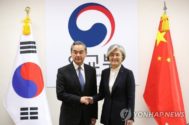
For their part, Beijing and Seoul advanced their strategic partnership through talks between Xi and South Korean President Moon Jae-in, the China-ROK-Japan summit in December, Wang’s visit to Seoul earlier that month, and the resumption of defense talks in October. But Moon’s latest China visit drew much domestic criticism for failing to secure Beijing’s cooperation on bilateral and regional priorities. Wang’s December visit to Seoul, meanwhile, was most remembered for his attacks on US “unilateralism” and “bullying.” US-China trade tensions and public clashes over Hong Kong present new challenges for the China-ROK partnership.
Japan - China
September — December 2019Speaking Softly but Planning for the Worst
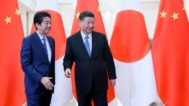
As Tokyo continued to press unsuccessfully for a date on Xi Jinping’s state visit to Japan, frictions continued on matters such as the number of Japanese nationals detained in China, human rights concerns involving Xinjiang and Hong Kong, and Japan’s tentative reaction to participation in both the Regional Comprehensive Economic Partnership and the Belt and its Road Initiative. Trade relations remained strong despite declining economic growth in China and near stagnation in Japan, with both sides continuing to enhance their defense capabilities.