Archives
Category: Uncategorized

China - Southeast Asia
January — April 2024China’s New Foreign Policy Moderation—Mixed Regional Implications
Incorporating major foreign policy initiatives of leader Xi Jinping, Beijing completed its effort from the past two years with instructions in January on China’s new approach to foreign affairs to Chinese foreign policy officials and others concerned. The new approach added authority and momentum to Beijing’s emphasis since Xi’s summit with US President Joe Biden last November on greater Chinese moderation and restraint as a “responsible” great power pursuing peace and development in dealing with Southeast Asian neighbors and elsewhere. Nevertheless, Beijing remains selective in how it applies moderation, and the record of the past two years shows great swings between moderation and truculence in its approach to foreign affairs, depending on circumstances which remain subject to change. The success of China’s regional importance showed in Singapore’s Institute of Southeast Asian Studies annual survey of regional elites with China viewed as both the leading economic and political-security power, overshadowing the United States, and the judgment that if forced to choose between them, more respondents would select China than the United States.
China - Taiwan
January — April 2024Taiwan and China—Steady As She Goes
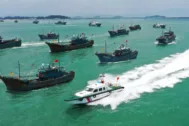
As 2024 dawned, Chinese President Xi Jinping reiterated in his New Year Address that Taiwan must unify with China. In her New Year Address, Taiwan President Tsai Ing-wen, with the election of her successor only 14 days away, repeated her offer to meet China on the basis of equality, mutual respect, and without preconditions, echoing themes dating back to her first inaugural address in 2016. On Jan. 14, Tsai’s chosen successor, Vice President Lai Ching-te, won an unprecedented third successive term for the Democratic Progressive Party, promising to uphold the independence of the Republic of China, but the party lost its majority in the legislature. A month later, two Chinese fishermen operating illegally near Kinmen Island died when their boat capsized as they were pursued by the Taiwan Coast Guard. Five days later, a Chinese Coast Guard vessel boarded and inspected a Taiwanese tour boat near Kinmen. Tensions grew but they did not boil over.
North Korea - South Korea
January — May 2024Mortal Menace, or Mere Mind Games?
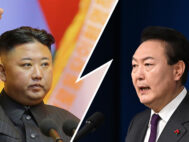
Kim Jong Un elaborated his radical new line on South Korea to the Supreme People’s Assembly (SPA) in January. It sounded just as nasty as when he first expounded it in December, but no more coherent. Though obscure, this is clearly very important. Hence most of this article is devoted to a detailed reading of what Kim said, in a bid to tease out what this means in practice for South Korea’s security. While awaiting further specification in a promised Constitutional amendment, our provisional assessment is that this is more bark than bite. Buttressing that view, close analysis of the two Koreas’ artillery shelling near the Northern Limit Line (NLL) in early January, and the barbs they also traded, highlights an element of performativity—especially from Pyongyang—that is somewhat reassuring. Despite much fiery rhetoric, and while vigilance and deterrence remain crucial, this does not look like a peninsula on the brink of war.

China - Korea
January — April 2024New Chapters, Old Dilemmas
China-ROK relations reached critical junctures across political, security, and economic fields. China-ROK relations had a bad start in 2024 with discord over regional security priorities. The inaugural US-Japan-ROK Indo-Pacific Dialogue in Washington on Jan. 5, a deputy foreign minister-level initiative emerging from the August 2023 Camp David summit, reignited frictions with Beijing. The resulting tensions constrained anticipation about their own trilateral summit with Tokyo. The shifting China-ROK trade structure and Chinese e-commerce practices emerged as central points of economic debate.
Japan - China
January — May 2024Sullen Stasis
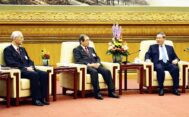
There were no high-level visits this reporting period with each side continuing to reiterate its stance on key issues—China’s dissatisfaction with Japan’s discharge of allegedly radioactive water into the Pacific, disagreements over the sovereignty of the Diaoyu/Senkaku islands, Tokyo’s concern with nationals detained in China on vague spying charges, resentment over China’s ban of marine exports from Japan, and concerns with Chinese cyber hacking. Japanese leaders increased their willingness to acknowledge that China is the principal threat not only to Japan but to the world. Beijing continued to denounce Japan, sometimes as a pawn in US plans to thwart China’s rise, sometimes as motivated by a desire to re-create the militant expansionist empire that led to World War II. Japan became increasingly active in international diplomacy and, while declaring fealty to the one-China policy, moved closer to Taiwan. Public opinion in both countries remained hostile toward the other.
Japan - Korea
January — April 2024Business As Planned Amid Domestic Challenges
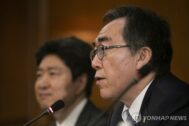
Following major turning points and breakthroughs of 2023, the start of 2024 has been steady, coordinated, and ordinary. In contrast to the highs and lows of the past five years, the rhythm of the relationship between Korea and Japan has settled to a welcome tone of “business as usual,” and business as planned. Both Prime Minister Kishida Fumio and President Yoon Suk Yeol faced serious challenges to their leadership with record low approval ratings and the conservative People Power Party’s defeat in Korea’s parliamentary elections. But for now, Japan-Korea relations are thriving as they follow through on commitments made at the Camp David summit. Washington, Seoul, and Tokyo continued to tick off their laundry list of promised deliverables from that summit. While they might no longer be meeting at the breathtaking pace of a trilateral meeting every 3.5 days, the three partners continued to meet almost bi-weekly at all levels, including the Cabinet level.

China - Russia
January — April 2024“March Madness” in Moscow and Beyond…
The concert hall massacre near Moscow on March 22 was a source of shock and awe for Russia and the world. The incident, which resulted in the deaths of 144 people and 551 wounded, was the largest since the 2003 Beslan school siege (where more than 330 hostages died). Its timing cast a long shadow over major developments in the first few months of 2024, particularly the fifth term of President Vladimir Putin, who won 87.28% of the vote just five days prior. It also made any effort to end the two-year Ukraine war more difficult, if not impossible. As a result, much of China’s mediation 2.0 (March 2-12) was in parking mode. The Sino-Russian strategic partnership, too, was tested by two different priorities: Moscow’s need for more security coordination on one hand and China’s interest in stability in the bilateral, regional, and global domains on the other. Whatever the outcome, the stage was set for more dynamic interactions between the two large powers in the months ahead.
Japan - Southeast Asia
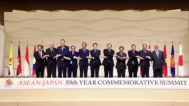
May 2023 — April 2024Strategic Dynamism: 50th Anniversary of Relations and New Security Ties
Japan-Southeast Asia relations marked two milestones in 2023-24. The first was the 50th anniversary of Japan-ASEAN Relations, during which Japan and ASEAN emphasized an equal partnership by adopting the keyword “co-creation” to promote economic prosperity and security stability in Southeast Asia and beyond. The second is strengthening Japan-Philippines bilateral strategic ties, not only bilaterally, but also trilaterally with the United States and quadrilaterally with Australia. Japan continuously engages with other Southeast Asian states and strengthens ties with ASEAN to reinforce ASEAN Centrality and unity, yet a challenge remains: how Japan can design a regional architecture in East Asia and the Indo-Pacific by clarifying the roles and division of labor among those institutions.

Regional Overview
September — December 2023The “Year of Elections” is Upon Us!
The major multilateral gatherings of the past year’s final trimester—the East Asia Summit (EAS) and associated ASEAN-arranged summitry in Indonesia in early September, the India-hosted G20 Summit a week later (Sept. 9-10 in Delhi), the ASEAN Defense Ministerial Meeting-Plus (ADMM-Plus) in Indonesia, and the concurrent Asia Pacific Economic Cooperation (APEC) Leaders Meeting in San Francisco on Nov. 16-17—were largely overshadowed by events (very) near and far away. The EAS and G20 Summits were most notable for who wasn’t there. Russian President Vladimir Putin skipped both meetings, sparing the hosts of the challenge (or embarrassment) of honoring (or ignoring) the international arrest warrant issued for him stemming from the Kremlin’s invasion and war against Ukraine. Those hoping for a fence-mending summit between Chinese President Xi Jinping and US President Joe Biden at the EAS or G20 were doubly disappointed; Xi skipped both meetings, while Biden only attended the G20, leaving the EAS to Vice President Kamala Harris.
US - Japan
September — December 2023As Good as it Gets?
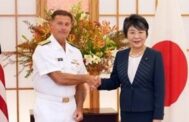
The US-Japan relationship may well be at its all-time best. Animated by a concordance of vision and interests, the two governments are closely coordinating across a wide range of issues in a variety of venues—bilateral and multilateral, political, economic, and military. Concern about the potential destabilizing effects of regional developments provides considerable motivation for the two to work together. The final reporting period of 2023 provided ample evidence of their convergence. If that past is prologue, the year ahead should be a good one. Unfortunately, however, the tide could be turning. A political funds scandal has ensnared Japan’s ruling Liberal Democratic Party (LDP), and the approval ratings of the government of Prime Minister Kishida Fumio are plummeting as a result. Even if the prime minister survives the scandal—and most indications are that he will—he will be tarred and distracted as the region and the world face new and mounting challenges.