Archives
Category: Uncategorized
US - Korea
September — December 2016Unrest and Tests
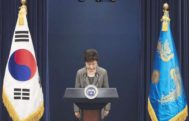
North Korea opened the final months of 2016 with a bang by conducting its fifth nuclear test on Sept. 9. It followed up with a series of rocket and missile tests, culminating the year with Kim Jong Un’s claim of an imminent long-range ballistic missile capability. Yet, political transition in South Korea and the United States proved the hallmarks of late 2016, suggesting potential shifts in the approaches on the Peninsula, while underscoring the firm commitment of the US and ROK to their alliance. The Park-Choi scandal led to massive protests the final two months of the year and an impeachment vote on Dec. 9 by the National Assembly, confusing political observers about the implications for South Korean political stability. Donald Trump’s surprise victory in the US raised questions among Koreans about US reliability as an alliance partner.

US - Southeast Asia
September — December 2016Philippine Follies
The rather bizarre behavior of Philippine President Rodrigo Duterte dominated the news in late 2016. The former Davao mayor displayed his well-known anti-US feelings while aggressively pursuing his allegedly extrajudicial campaign against Philippine drug trafficking. Duterte’s invective ran the gamut from accusations that the US still treated the Philippines as a colony to a vulgar epithet directed at President Obama. There were also threats to end all bilateral military exercises and to terminate bilateral defense agreements. Philippine officials tried to soften Duterte’s remarks and US officials offered reassurances that the US would remain a reliable defense partner and planned to continue providing military assistance. Elsewhere, the US continued to focus attention on maritime security while avoiding direct involvement in the emerging controversy over treatment of the Muslim population in Rakine State, Myanmar.

China - Southeast Asia
September — December 2016Beijing Presses Its Advantages
Chinese leaders steered relations in Southeast Asia to their advantage after successfully countering the adverse ruling of the arbitral tribunal in The Hague against China’s controversial claims in the South China Sea. The remarkable turnabout in the Philippines, from primary claimant to pliant partner, and notable restraint on the South China Sea disputes by other claimants and concerned powers allowed Beijing to seek greater regional influence. In the closing months of 2016, Beijing made major advances with visits by the Philippine president and Malaysian prime minister, Premier Li Keqiang’s participation at ASEAN and East Asia Summit meetings in September, and President Xi Jinping’s participation at the APEC Leaders Meeting in November. China adopted a stronger regional leadership role as the US failed to implement important initiatives, notably the Trans-Pacific Partnership (TPP). The main uncertainty in China’s positive outlook was President-elect Donald Trump who repeatedly criticized China, foreshadowing a less predictable and less reticent US approach to differences with China.
China - Taiwan
September — December 2016Adjusting to New Realities
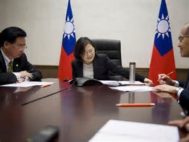
After President Tsai’s inauguration, Beijing continued to press her to accept the 1992 Consensus on one China. When China blocked ICAO from inviting Taipei in September, Tsai reacted sharply. In her “Double Ten” remarks, she reaffirmed her cross-strait policy and said she would neither give in to pressure nor return to past confrontational actions. In October, CCP General Secretary Xi Jinping made remarks implying Beijing’s understanding that Tsai would not endorse one China. The election of Donald Trump created in Taipei both hope of friendship from Republicans and concern Taipei could become a pawn in Trump’s bargaining with China. Trump’s tweets about his telephone conversation with Tsai and comments about one China and trade have sparked intense speculation and uncertainty about their implications for cross-strait and US relations with Taiwan and China.
North Korea - South Korea
September 2016 — January 2017Back to Diplomacy in 2017?
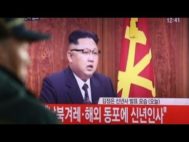
South Korea’s hardline response to North Korea’s nuclear and missile tests earlier in the year, which led to a complete severing of all inter-Korean contact, meant there was effectively no relationship between the two Koreas in final months of 2016. With the stalemate in relations coupled with the political turmoil in both Washington and Seoul, Aidan Foster-Carter provides his analysis to help understand how we got here by looking back and, even more importantly, looking forward. While North Korea watches and waits, there is a worrying power vacuum in Seoul in the wake of “ChoiSunsil-gate.” The next move largely depends on how South Korea responds to the impeachment of President Park Geun-hye. [Editors]

China - Korea
August — December 2016Nuclear Test, Political Fallout, and Domestic Turmoil
North Korea’s fifth nuclear test on Sept. 9 and the intensified test-firing of a range of missile types throughout 2016 underscored existing weaknesses in using dialogue and sanctions as a response. The timing of Pyongyang’s latest provocations coincided with the G20 Summit in Hangzhou and ASEAN-related meetings in Vientiane. President Park Geun-hye used the venues for sideline talks with President Xi Jinping and President Obama. The nuclear test directly challenged a nonproliferation statement adopted by East Asia Summit (EAS) members on Oct. 8, which urged North Korea to abandon its weapons programs. Following extended negotiations with the US, China finally joined the international community in adopting UN Security Council Resolution 2321 on Nov. 30. In addition to strains in the China-DPRK relationship, regional coordination on North Korea remains challenged by disputes between China and the ROK over THAAD and illegal Chinese fishing.
Japan - China
September — December 2016Abe-Xi Met; Diplomats Talked; Wait ‘Til Next Year…
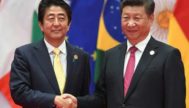
Prime Minister Abe and President Xi met twice in the last four months of 2016. Both committed to advancing the relationship during 2017, taking advantage of the opportunities presented by historic anniversaries – the 45th anniversary of normalization and the 40th anniversary of the Japan-China Friendship Treaty. Both leaders also committed to the early implementation of an air and maritime communications mechanism. Notwithstanding the increasing air and maritime interactions between the PLA and the Japanese SDF and Coast Guard, working-level officials were unable to reach agreement. At the end of the year, the Abe government announced a record high defense budget for 2017; days later the China’s aircraft carrier transited in international waters between Okinawa and Miyakojima into the western Pacific. Meanwhile public opinion polling revealed growing pessimism in Japan with respect to China and Japan-China relations.
Japan - Korea
September — December 2016What Goes Up, Must Come Down
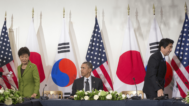
Going into the final months of 2016, Seoul-Tokyo relations had been on a positive trajectory, creating that ill feeling that it was time for things to go awry. While the relatively calm period witnessed palpable results with the signing of the General Security of Military Information Agreement (GSOMIA) and solidarity against North Korea’s provocations, the political chaos in South Korea that climaxed with the impeachment of President Park Geun-hye in December put the brakes on further developments. The scandals surrounding the abuse of power involving a shadowy confidante made it difficult to shake off the feeling that the administration’s deals with Japan have become tainted. Now, South Korean presidential hopefuls are tapping into public discontent to undermine the “comfort women” deal reached in December 2015, and there is high skepticism in the media over the implementation of GSOMIA.
China - Russia
September — December 2016The Dawn of a Brave Trump World
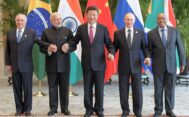
The end of 2016 was a period of extraordinary uncertainty in world affairs. Much of the world was engulfed by waves of refugees, terror attacks, and rising populism, culminating in the election of Donald Trump as president in the US. Against this backdrop, top Chinese and Russian leaders interfaced regularly. Military ties also gained momentum as the two armed forces conducted a joint exercise in the South China Sea and stepped up coordination in missile defense. Twenty years after their “strategic partnership of coordination,” the two countries still resist a formal alliance, but the perceived challenge to their national interests and strategic space by Western alliances seems to have led to more proactive and coordinated actions. Meanwhile, both Moscow and Beijing were anxiously awaiting the Trump presidency. Welcome to the brave new world of the reversed strategic triangle, Trump style.
India - East Asia
January — December 2016Robust but not Riveting
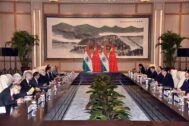
India deployed its prime minister, president, and vice president as well as key Cabinet officials across East Asia and the Pacific in 2016 in support of its “Act East Policy.” Since 2015 was the first full year of India “acting east” under Prime Minister Narendra Modi’s administration, 2016 was not expected to be a defining year in India-East Asia relations and it was not; rather, India’s engagement was robust but not riveting. After years of negotiating, a nuclear deal between India and Japan was one major development. More troubling, trade and investment ties were lackluster due to a range of international as well as specific bilateral factors, although India continues to participate in negotiations for the Regional Comprehensive Economic Partnership (RCEP) agreement. India-China relations were noticeably cool and contentious. Still, India pursued broad and innovative outreach initiatives despite more pressing priorities, limited leverage, and East Asia’s own flux, contestations, and uncertainties. An example of innovation was President Mukherjee’s first-ever state visit to Papua New Guinea. He also made the first Indian presidential visit to China since 2000. Meanwhile, Vice President Ansari made a first-ever vice presidential visit to Brunei and to Thailand after a 50-year gap. So, India “acted east” as Modi promised soon after taking office in 2014, but it was hardly a bravura performance.