Archives
Category: Uncategorized
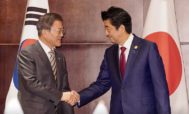
Japan - Korea
September — December 2019Thaws and Tremors
If relations between Japan and South Korea were defined by “cold economics, cold politics” through the summer of 2019 (as we described it in the September issue of Comparative Connections), South Korea-Japan ties at the end of 2019 had begun a tentative thaw. Tensions between the two countries have fallen in the waning months of 2019 from their peak in the summer, when Japan imposed export restrictions on South Korea and Seoul Korea indicated its intent to withdraw from the General Security of Military Information Sharing Agreement (GSOMIA). Following a comparatively quiet but tense period in September and October, both countries took de-escalatory steps starting in November—most notably South Korea’s conditional decision not to withdraw from GSOMIA after all—that improved the atmosphere and created space for diplomacy.
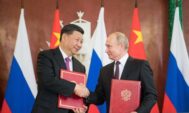
China - Russia
September — December 2019The Art and Agony of Avoiding an Alliance
In the last four months of 2019, Beijing and Moscow continued to broaden and deepen their strategic partnership across political, economic, diplomatic, and security areas with some visible outcomes: the 3,000-km, 38-bcm “Power of Siberia” gas line went into operation and the cross-border rail and road bridges were finally completed after decades of endless negotiations and delays. While Chinese and Russian top leaders jointly steered the Shanghai Cooperation Organization (SCO) and BRICS through challenging times, it was in military relations that breakthroughs were made.
This included Russia’s assistance in the construction of a missile attack early-warning system for China, China’s participation in Russia’s Center-2019 large-scale exercises, and the first joint naval exercises with Iran in the last few days of 2019. These developments took place amid continuous discussion on both sides about the nature, scope, and degree of an “alliance” relationship, formal or not, in an increasingly fluid and challenging world. With the rapidly deteriorating Iran-US relations at the onset of the new decade, it remains to be seen how Moscow and Beijing can keep their “best ever” relationship short of moving to a formal alliance, a state of affairs they have been trying to avoid for years.
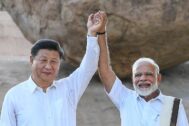
India - East Asia
January — December 2019Domestic Distractions Disrupt, but Do Not Derail, India’s Engagement
India’s 2019 interactions with the Indo-Pacific were active if measured by diplomatic outreach and defense engagements, but ended with two “whimpers” rather than “bangs.” The first was the decision to drop out of the Regional Comprehensive Economic Partnership (RCEP), announced at the ASEAN-convened summits in Bangkok in November. Until the announcement, India seemed ready to join the agreement. The second was the postponement of Japanese Prime Minister Abe Shinzo’s scheduled trip to Assam and Manipur states in northeast India for an annual exchange of prime ministerial visits. The postponement was reportedly decided after discussions between the two governments in the wake of violence against the Indian government’s controversial citizenship bill. The two unrelated developments did speak to two common themes: the first being the limits of India’s East Asia relations, and the second the occasional interruption, by domestic drivers, of India’s continued upward (if not steep) trajectory in relations with the Indo-Pacific region.
Regional Overview
May — August 2019Defining and Refining the Indo-Pacific Concept
For the past two years, US officials have made reference to a new Indo-Pacific Strategy. The June 1 release of the Defense Department’s Indo-Pacific Strategy Report provides some clarification and contains many familiar themes, including the need for a credible forward presence and strengthened alliances and partnerships “to preserve a free and open Indo-Pacific where sovereignty, independence, and territorial integrity are safeguarded.” The Report further notes “the critical linkages between economics, governance, and security.” Not to be outdone, ASEAN introduced its own Outlook on the Indo-Pacific, with “inclusivity” as the central theme. The G20 meeting in Osaka was probably as successful as was possible, but the group offered little more than rhetorical support for efforts to quell the US-China trade war. Finally, the Japan, South Korea, China trilateral provided some reason for hope –but just a little.
US - Japan
May — August 2019A Busy Summer of Bilateralism
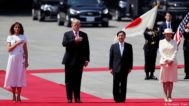
Relations between the United States and Japan were active over the summer with two visits by President Donald Trump to Japan. The first was for Trump and First Lady Melania Trump to be the first state guests of the new Reiwa Era. The second was to participate in the G20 Summit in Osaka. Meanwhile, the two countries engaged in a series of trade talks that produced the broad outline of an agreement that is expected to be signed in late September. Throughout, domestic politics played an important role with upper house elections in Japan and Trump’s threat of tariffs influencing the pace of trade negotiations. In coming months, the US presidential election campaign will likely continue to shape alliance management.
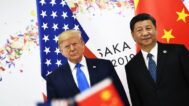
US - China
May — August 2019The Trade Deal Falls Through
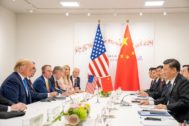
US-China trade talks collapsed after China reneged on a significant portion of a draft agreement that had been painstakingly written by US and Chinese negotiators. After Donald Trump and Xi Jinping met on the sidelines of the G20 in Osaka, talks resumed but failed to make progress. Acting Secretary of Defense Patrick Shanahan met Defense Minster Wei Fenghe and both delivered speeches at the Shangri-La Dialogue in Singapore. The US sold two arms packages to Taiwan totaling over $10 billion, which included M1A2T Abrams tanks, 250 Stinger missiles, and 66 F16V fighter jets. The 26th ASEAN Regional Forum (ARF) provided an opportunity for Secretary of State Mike Pompeo and Foreign Minister Wang Yi to meet. The navies of both the US and China conducted drills in the South China Sea, and US Navy ships conducted three freedom of navigation operations (FONOPs) in the Spratlys. Pro-democracy demonstrations in Hong Kong began in early June and continued throughout the summer with spasms of violence by Hong Kong police and protesters. Beijing accused the US of being behind the protests, a charge that Washington adamantly denied.
US - Korea
May — August 2019Friction, Impasse, and Projectiles
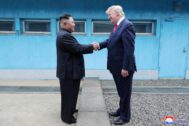
Despite the renewal of limited US-ROK joint exercises on the Korean Peninsula, the United States and South Korea saw friction on other fronts. This includes the lack of progress in US-DPRK talks and by extension South Korea’s engagement with the North, renewed focus on host-nation support during the new US defense secretary’s visit, the suggestion that the US would place intermediate-range missiles in South Korea, Seoul’s decision to withdraw from a defense intelligence-sharing pact with Japan, and President Trump’s perceived lack of sensitivity toward South Korean interests. The ROK’s economic slowdown complicated its growing strategic frustration, and the flareup in South Korea’s relations with Japan left the US pondering its role as tensions worsened between its two Northeast Asia allies. North Korea condemned the US-ROK military exercises, tested multiple new short-range missiles, praised Trump while berating his subordinates, and stalled on working-level talks, despite Kim Jong Un’s commitment to Trump in Panmunjom, following Trump’s historic step across the military demarcation line.
US - Southeast Asia
May — August 2019ASEAN Centrality Under Siege
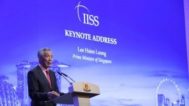
Two regional meetings in Southeast Asia over the summer – the Shangri-La Dialogue in Singapore and the ASEAN Regional Forum in Bangkok – revealed growing angst among Southeast Asian leaders over narrowing political space in which to balance relations in the context of US-China competition. More broadly, the relevance of ASEAN in these polarizing times has come into question and subregional arrangements, such as the Ayeyawady-Chaopraya-Mekong Economic Cooperation Strategy (ACMECS) are emerging. Recent incidents point to growing Chinese assertiveness in the South China Sea. A reported agreement with Cambodia to build a strategic outpost on the Gulf of Thailand has drawn sharp criticism from Washington. But it is unclear how able or willing Southeast Asian governments are to push back since they view China as a critical economic partner. As several Southeast Asian leaders contemplate retirement, economic security is a common element in the legacies they envision.
China - Southeast Asia
May — August 2019Broad Confidence, Coercive Advances, Complicated Regional Responses
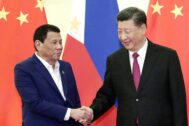
Chinese officials and authoritative commentary continued their positive portrayal of China-Southeast Asia relations. Routine public assessments avowed confidence that differences over the South China Sea and challenges posed by the United States were manageable while China’s economic attraction for the region would grow. Against this favorable background, Chinese maritime forces, in moves Beijing did not publicize, challenged Vietnam and Malaysia over oil and gas drilling rights in the South China Sea. They also continued to use maritime force to challenge Manila’s efforts to construct modest infrastructure upgrades at Philippine-occupied Thitu Island.
China - Taiwan
May — August 2019Hong Kong Impacts Taiwan Elections
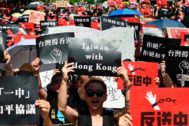
The coming elections in Taiwan have shaped cross-strait relations. To a surprising degree, Hong Kong demonstrations have influenced the early campaign, helping President Tsai Ing-wen win her party’s nomination and requiring opposition candidates to reject Beijing’s “one country, two systems” more firmly than they would have otherwise. In the midst of US-China tensions, Washington has approved two major arms sales to Taiwan and taken other steps to improve US-Taiwan relations. Beijing opposes Tsai and has taken steps publicly and behind the scenes to boost the KMT’s populist candidate, Kaohsiung Mayor Han Kuo-yu. Beijing’s hardline response to Hong Kong demonstrations will likely continue to benefit Tsai as the election approaches in January.