Archives
Category: Uncategorized
China - Russia
September — December 2023From Geopolitics to Geoeconomics
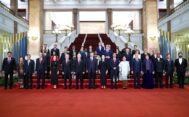
In the last months of 2023, China and Russia increasingly prioritized economics and geoeconomics in their bilateral interactions. In the post-COVID era and with a virtual standstill in the Russian-Ukraine war, both sides searched for new growth potential in domestic, bilateral, and multilateral domains. In October, Russian President Putin visited Beijing for the 3rd Belt and Road Forum (BRF), which was attended by thousands of participants from 151 countries. It was a convenient occasion for Putin to expand his diplomacy, which had been considerably strained by Western sanctions since early 2022. Putin’s lengthy meetings (formal talks, a working lunch, and a “private tea meeting”) took almost half a day for the two-day BEF. Ten years after Xi’s launch of the Belt and Road Initiative (BRI), both sides found it necessary to adjust their policies between the increasingly globalized BRI and Russia’s regional grouping, the Eurasian Economic Union (EAEU).
India - East Asia
January — December 2023A Year of India Everything Everywhere All at Once
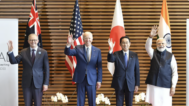
In 2023, the Indo-Pacific was something of a backdrop to India’s robust global activities, including the presidency of the Group of Twenty (G20), chairing for the first time the Shanghai Cooperation Organization summit, participating in the Group of Seven summit, convening for the first time the Voice of Global South summits, and co-chairing with the United States the Partnership for Global Infrastructure and Investment and the India-Middle East-Europe Economic Corridor initiatives launched on the sidelines of the September G20 Summit in Delhi. Comparatively, India’s Indo-Pacific engagements were less high-profile and leader-led but still numerous and active. India’s low-level but wide-ranging defense diplomacy is particularly noteworthy. Prime Minister Modi and External Affairs Minister Jaishankar, while pre-occupied by India’s role in global diplomacy, made important visits in the Indo-Pacific, with the PM making four country stops on two regional trips to the region; the first in May to the G7 Summit in Hiroshima, followed by stops in Papua New Guinea and Australia, and another in September to Jakarta, Indonesia for the annual ASEAN-led summit meetings, including the annual India-ASEAN dialogue.
Regional Overview
May — August 2023Regional Overview: Building Partnerships Amidst Major Power Competition
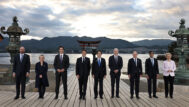
Major power competition was the primary topic du jure at virtually all of this trimester’s major multilateral gatherings, with Russia’s invasion of Ukraine continuing to serve as a litmus test—a test many participants struggled to avoid taking. It was clear which side of the fence the G7 leaders stood on; Putin’s invasion was soundly condemned and Sino-centric warning bells were again gently sounded. At the BRICS Summit and Shanghai Cooperation Organization (sans the US), those alarms were clearly muted, as they were at the ASEAN Regional Forum, at which foreign ministers from all three were present. Headlines from the IISS Shangri-la Dialogue focused on the meeting that did not occur, as China’s defense minister pointedly refused to meet with his US counterpart. At the ASEAN-ISIS’ Asia-Pacific Roundtable, participants lamented the impact of major power tensions on ASEAN unity, even though ASEAN’s main challenges are internal ones that predate the downturn in China-US relations. Meanwhile, Beijing and Washington both expended considerable effort at these and other events throughout the reporting period fortifying and expanding their partnerships, even as many neighbors struggled not to choose sides or to keep a foot in both camps.
US - Japan
May — August 2023A Busy Diplomatic Calendar for Biden and Kishida
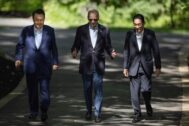
2023 is the year for the US and Japan to intensify their cooperation in multilateral venues. The first opportunity was the G7 meeting in Hiroshima in May, and the last will be the APEC meeting in San Francisco in November. In between, partners were hosting other important meetings: the NATO Summit in Lithuania and the G20 in India. Across these meetings, Russia’s war in Ukraine has stayed at the top of the agenda. The war has focused attention on the rules-based order, but global economic cooperation was not far behind. Prime Minister Kishida Fumio traveled to Africa and the Middle East to offer assistance for food insecurity and to stabilize energy markets, while President Joe Biden reached out to nations in the Indo-Pacific, including Pacific Island nations and Vietnam, to deepen strategic cooperation. China continues to loom large. The Biden administration sent three Cabinet members to Beijing for long sought consultations. Secretary of State Antony Blinken finally realized his planned trip on June 18-19. Secretary of the Treasury Janet Yellen followed on July 6-9 to meet with her counterpart, Vice Premier He Lifeng.
US - China
May — August 2023US-China Effort to Set “Guardrails” Back on Track for Now
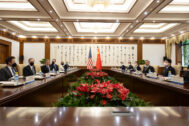
The placement of the proposed “guardrails” that Joe Biden and Xi Jinping sought to erect last fall in Bali finally commenced in earnest with the visits to Beijing by three Cabinet secretaries and one National Security Council principals-level appointee. Important steps were taken to put the balloon incident behind them, with lines of communication re-opened, assurances exchanged, and incremental forward progress recorded even in areas such as export controls, where US and China had previously clashed. Defense exchanges remain an area where progress lags. Whether the “guardrails” can survive their first contact with US election year polemics remains to be seen. As ties stabilized, both sides also engaged in sanctions and countermeasures as well as domestic rulemaking to secure their national economic and security interests. All along, the administration continued building “situations of strength” with its allies and partners to shape the strategic environment around China, which Beijing viewed as an act of encirclement.

US - Korea
May — August 2023Diff’rent Strokes for Different Folks
The May-August 2023 reporting period saw further divergence between Washington’s relations with Seoul and Pyongyang. This dynamic was an acceleration of a trend already evinced at the April Joe Biden-Yoon Suk-yeol summit that produced the Washington Declaration modernizing US-South Korea extended deterrence, and the alliance as a whole. Washington-Seoul bonhomie contrasts manifestly with Washington-Pyongyang relations, whose level of hostility remains the same as four months ago, 14 months ago, or 24 months ago. That is, all the positive action during summer 2023 came from the continued dramatic growth in the US-South Korea alliance, notably via the extraordinary formation of a genuine trilateral US-South Korea-Japan quasi-alliance. This development has been in the works for the last 18-24 months, was given momentum by improving South Korea-Japan government relations and a Yoon-Kishida summit in May, and was concretely founded in August at the US-South Korea-Japan summit at Camp David.
US - India
May — August 2023From Non-Alignment to Realignment
This chapter was made possible through a grant from the Hindu American Foundation.
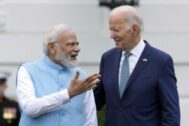
The US and India expanded cooperation across various domains in the second reporting period of 2023. The two moved to materialize projects and initiatives that were conceived in the first quarter, in wide-ranging domains with significant geopolitical and geoeconomic scope including defense cooperation, critical and emerging technologies, and infrastructure development. While New Delhi continued to straddle groupings such as BRICS, Shanghai Cooperation Organization, and the Quadrilateral Security Dialogue, the US-India partnership broke ground on more initiatives than any of India’s other bilateral relationships. Modi and Biden visited each other’s capitals and reaffirmed their commitment to a rules-based international order. The rousing reception Modi received in Washington and the continued US preeminence in most major trade and technology initiatives conceived by India highlighted the growing partnership between the two democracies. And the two leaders, while facing elections next year, seem willing to work together on common global priorities—sometimes at domestic political costs.
US - Southeast Asia
May — August 2023New Leaders Challenged by US-China Rivalry
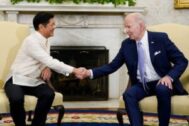
Over the summer three Southeast Asian nations—Thailand, Cambodia, and Indonesia—conducted political contests or prepared for them, with Washington and Beijing watching closely for shifts in alignments or opportunities to make inroads with new leaders. Despite this, and possibly because of it, China made bold moves in the South China Sea and caused outcry in the region with the release of a map supporting its claims to the “Nine-Dash Line.” Beijing also showed signs of worry about Russian inroads into Southeast Asia and the Indo-Pacific region. The high-profile visit to Washington of Philippine President Ferdinand “Bongbong” Marcos, Jr. enabled both countries to reconfirm the US-Philippines alliance publicly, although it gave little indication of where the broader relationship may be headed. ASEAN continued to make little headway in helping to resolve the conflict in Myanmar; and the 2023 chair, Jakarta attempted to redirect the group toward economic goals and a common approach to looming food insecurity in the region.
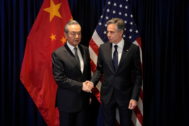
China’s recently recognized position as Southeast Asia’s leading power faces growing challenges from efforts of the Biden administration to counter Chinese ambitions and advance US regional influence. Beijing has stuck to practices of strong diplomatic engagement, economic enticement, and a range of coercive measures that have been broadly successful in the past but seem to have failed badly in the Philippines, now moving into the US orbit.
China - Taiwan
May — August 2023Stark Choices Confront Taiwan Voters
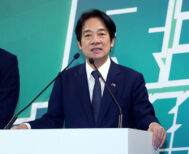
Taiwan’s presidential election campaign has begun. Lai Ching-te, Taiwan’s vice president and Democratic Progressive Party (DPP) candidate, Hou Yu-ih from the Nationalist (Kuomintang, or KMT) Party, Ko Wen-je of Taiwan People’s Party (TPP), and independent Terry Gou offer Taiwan voters four different visions of Taiwan’s future relationship with China. As senior US and Chinese officials resumed long-stalled face-to-face meetings, China warned once again that it has no room for compromise or concession on Taiwan. Yet, when Lai completed almost invisible transits through the US en route to Paraguay and back, China’s military response seemed almost pro-forma. When US, Japanese, and South Korean leaders reiterated at the trilateral Camp David summit their staunch opposition to China’s intimidation, China chose to interpret their words as one more promise to support Taiwan. The US accelerated weapons deliveries to Taiwan and expanded training for Taiwan’s military, and Taiwan announced that its defense budget will increase by 7.5% in 2024. Taiwan’s TSMC moved forward on constructing its Arizona factory despite some hiccups, and the US and Taiwan signed a long-awaited trade deal—the first part of their 21st Century Trade Initiative.