Archives
Category: Uncategorized
Japan - China
September — December 2020Treading Water
Perhaps the biggest news of the last third of 2020 was that Xi Jinping’s often-postponed state visit to Japan will not take place in spring 2021 and may be postponed to September 2022, in commemoration of the 50th anniversary of the normalization of China-Japan diplomatic relations. Both countries’ economies recovered well from the pandemic, with robust trade between them even as they continued to snipe at each other politically and upgrade their military capabilities. China continued to expand its presence in waters of the East China Sea claimed by Japan.
Japan - Korea
September — December 2020A New Leader in Japan and Uncertain Future Scenarios
The inauguration of Suga Yoshihide as Japan’s prime minister in September 2020 did not lead to a breakthrough in the stalled Japan-South Korea relationship. However, it provided an opportunity for South Korea to signal that President Moon Jae-in would be interested in a summit meeting with Suga. In the final months of 2020, it became apparent that both governments in Seoul and Tokyo felt the need to improve bilateral ties, but had not yet found a way to make that happen.
China - Russia
September — December 2020Light at the End of the Tunnel?
The end of 2020 may well be an “end-of-history” moment for a world riddled with disease, death, despair, and de-linkage. Despite huge differences in how Russia and China coped with these challenges, bilateral cooperation in a variety of areas (SCO, COVID-19, response to the US-led Indo-Pacific strategy, etc.) were sustained and even enhanced in the last months of 2020. A salient factor was Washington’s dual-adversary undertaking, which pushed Moscow and Beijing toward deeper and broader strategic coordination. The post-election instability also cast a long shadow over US domestic and foreign policies. As 2020 drew to a close, Beijing and Moscow stepped up their strategic coordination for a possible resetting of relations with the Biden administration, or perhaps even a Biden moment, thanks to Trump’s legacy.
India - East Asia
January — December 2020India-East Asia Relations: Acting Across the Indo-Pacific, Actually and Virtually
Despite the COVID-19 global pandemic, India’s engagement with East Asia during 2020 remained reasonably active, both actually and virtually. India’s external affairs minister, S. Jaishankar, took several opportunities to emphasize that the Indo-Pacific concept (i.e., the inclusion of India and the Indian Ocean region) has gained wider acceptance. In his opening remarks at the 2nd Quad Ministerial Meeting, for example, he said “[i]t is a matter of satisfaction that the Indo-Pacific concept has gained increasingly wider acceptance.” And he also repeatedly highlighted India’s commitment to the concept, saying “The Indo-Pacific Ocean’s Initiative that [India] tabled at the East Asia Summit [in 2019] is a development with considerable promise in that context.” He pointedly highlighted India’s actions at the frontier of the western Pacific, telling an Indonesia-Australia convened town hall that “[i]t is revealing that in the midst of a global health crisis, Indian diplomacy has actually put its Indo-Pacific approach into practice. We provided assistance to Solomon Islands, Nauru, Papua New Guinea, Kiribati, Tonga, Tuvalu and Palau for procurement of medical equipment and supplies to assist in their response to COVID-19.” However, on two major counts—the decision by most regional countries to sign the Regional Comprehensive Economic Partnership agreement (RCEP) without India (which had dropped out of the negotiations last year) and the confrontation-filled Sino-India relationship—India’s East Asian relations were complicated rather than positive. Brighter spots included progress on the “Quad Consultations” (US, Japan, Australia, and India) and concomitant steady progress in bilateral security ties to Japan and Australia.

Regional Overview
May — August 2020An “Alliance of Democracies”: Is There Any There There?
As the region (and world) focus on the fight against the global COVID-19 pandemic, the “cold peace” between Washington and Beijing continued to heat up, with implications throughout and beyond the Indo-Asia-Pacific region. US pronouncements during the last four months should dispel any doubt that the US Asia strategy is aimed first and foremost at China, and more specifically at the Chinese Communist Party (CCP). While critics of the Trump administration’s unilateralist approach continue to argue that “America First means America Alone,” this does not appear to be the case where China is concerned. Not only does the much-maligned (including by us) “Quad”—the loose grouping of the US, Australia, India, and Japan—show signs of coordinated backbone, it seems to be forming the basis for a new “Quad-Plus” that includes other “like-minded states.” The Quad’s focus on the promotion of the rule of law and freedom of navigation has Beijing’s attention, as does Secretary of State Mike Pompeo’s recent comment that “(M)aybe it’s time for a new grouping of like-minded nations … a new alliance of democracies.”
Meanwhile, the COVID-19 pandemic continues to hammer regional economies and the recovery, if and when it occurs, is likely to be long and uneven. It looks like there may be a new model that describes its impact, and it doesn’t augur well for those countries. Finally, we offer some framing thoughts for a potential Biden foreign policy as the US presidential campaign enters the homestretch.
US - Japan
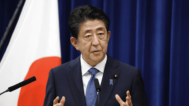
May — August 2020Unexpected Turbulence for the Alliance
Several unexpected events during the summer of 2020 confounded US-Japan ties. The COVID-19 pandemic continued to challenge governments in Tokyo and Washington, as the number of infected grew. The scale of the pandemic’s impact was far greater in the United States, with new cases climbing in southern and western states. Japan’s metropolitan centers faced an uptick in cases, but so too did less populated regions. The mortality rate of the United States hovered at 3%, a far more worrisome indicator that the pandemic was far from contained. In contrast, Japan continued to have a relatively low mortality rate of 1.9%.
US - China
May — August 2020US-China Relations in Free Fall
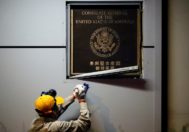
President Trump blamed China for the spread of the coronavirus, which opened the door to tougher US policies on a range of issues from Hong Kong to Xinjiang. The Phase One trade deal remained intact, although Chinese purchases of US goods lagged targets in the agreement. Senior Trump administration officials delivered a series of speeches that condemned Chinese policies and suggested that the CCP poses an unacceptable threat to the United States and other democracies. Charging that the Chinese consulate in Houston was engaged in espionage, the US demanded it be closed. Beijing retaliated by shutting down the US Consulate in Chengdu. The US aligned its South China Sea policy more closely with the July 2016 tribunal ruling and declared China’s “nine-dash line” claim and actions based on it to be illegal. Tensions increased over Taiwan as the US took several steps to strengthen ties with Taipei and deter Chinese coercion. China’s imposition of national security legislation in Hong Kong resulted in the US levying sanctions on Hong Kong officials and the suspension of most US bilateral agreements with the former British Colony. A meeting between Secretary of State Mike Pompeo and Chinese Politburo Member Yang Jiechi in Hawaii did little to slow the downward slide in US-China relations.
US - Korea
May — August 2020Shadows Still Remain, and Waiting for a Cold November Rain
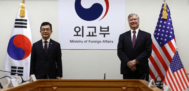
While inter-Korean relations saw a fraught—even explosive—May-August reporting period, US relations with South Korea and North Korea settled into a holding pattern commingling frustration, disappointment, occasional bared teeth (from North Korea), and frequently forced smiles (from South Korea). Washington and Seoul failed to reach agreement on troop burden-sharing, an issue weighing down the US-South Korea alliance. Meanwhile, US-South Korea joint military exercises remain scaled-down, in part due to COVID-19, even as South Korea is committing to greater capabilities for its own defense. Regarding alliance coordination on diplomacy with North Korea, the administrations of Donald Trump and Moon Jae-in continue to try to mask obvious differences in prioritization of engagement for reconciliation and pressure for denuclearization. Ties between Washington and Pyongyang have stalled such that even talking about talking makes news. And in the background, Kim Jong Un’s regime continues to build up and improve its nuclear weapons program and missile arsenal.
Overall, US relations with the two Koreas are in a wait-and-see mode, with all three governments delaying significant steps until after the November US presidential election.
US - Southeast Asia
May — August 2020Diplomatic Doldrums: ASEAN Loses Momentum in the Pandemic as Security Tensions Rise
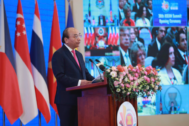
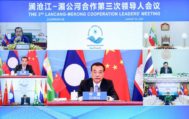
As Southeast Asia struggles to gain traction in the COVID-19 pandemic and address the economic damage it has imposed, leaders are hobbled by travel restrictions and other conditions that make forging a regional approach to the virus more difficult. Although most states have launched partial and cautious reopening strategies, most intergovernmental business is still conducted online. This will remain the case for the rest of 2020, given widespread fears of a second surge of the coronavirus. In the meantime, several leaders face political challenges as their domestic populations struggle under the worst recession in years. Diplomatic traffic is ordinarily busy in the summer in Southeast Asia, but this year the Shangri-la Dialogue in Singapore was cancelled, the ASEAN Summit forced to go online, and the ASEAN Regional Forum (ARF) pushed into the early fall, also to be conducted by video. Security tensions were not held in abeyance by COVID, and may have been exacerbated by it. China’s attempts to disrupt oil and gas explorations of the Southeast Asian claimants in the South China Sea evoked an unusually strong statement from Washington in mid-July; the reactions of the Southeast Asian claimants, particularly Vietnam and the Philippines, were a litmus test in part of their confidence in the US to ameliorate the situation. A security crisis of a different sort continued as the Mekong River entered its second year of drought, raising concerns about upstream dams controlled by China.
China - Southeast Asia
May — August 2020China Faces Stronger US Opposition in South China Sea
Beijing responded methodically to a major escalation in US challenges to Chinese expansionism in the South China Sea. Officials from Xi Jinping on down reached out to Southeast Asian countries with emphasis on growing economic relations and cooperation in countering COVID-19. Top-level officials generally eschewed public criticism of the United States on South China Sea issues, while government ministries and official and unofficial media used sometimes tough language in criticizing Washington. Overall, Beijing registered satisfaction that ASEAN adopted a neutral stance and most other states showed little sign of leaning toward the US against China.