Archives
Category: Uncategorized
China - Korea
May — August 2018China’s Multiple Roles in the Korean Drama
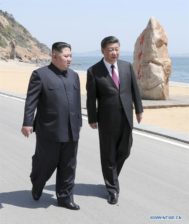
Building on the first Xi-Kim summit held in March, Kim Jong Un visited China twice on May 7-8 and June 19-20 for talks with President Xi Jinping, before and after the Trump-Kim summit on June 12. The Xi-Kim meetings affirmed Pyongyang’s commitments to peninsular peace and denuclearization embodied in the April 27 Panmunjom Declaration, but also raised South Korean uncertainties over China’s role and intentions. Although North Korea took its first step toward denuclearization by destroying its Punggye-ri atomic bomb test site, skeptics questioned the significance of the move. Beijing and Seoul forged a favorable environment for regional security cooperation by resuming working-level defense talks. Trilateral talks with Japan also resumed after a three-year deadlock. Despite indications of improving economic and cultural ties, the China-ROK security relationship remains constrained by strategic differences regarding implementation of the peace and denuclearization process.

Japan - China
May — August 2018Warm Words, Underlying Anxieties
Government-to-government relations were cordial over the summer, with the public expression of differences minimized to emphasize their common opposition to US protectionist trade policies. Bilateral trade and tourism posted impressive gains. Both leaders seemed likely to continue in office, though China’s annual Beidaihe meeting of power brokers allegedly criticized the disappointing results of President Xi Jinping’s economic restructuring program, his aggressive foreign policies, and the excesses of his cult of personality. Unimpressive popularity polls notwithstanding, Prime Minister Abe Shinzō had solid support for re-election as president of the Liberal Democratic Party and is therefore likely to win a third consecutive term as prime minister. Abe remained optimistic about receiving an invitation for a state visit to Beijing. However, Japan continued to complain about China’s military expansion and to strengthen its defenses. Summing up China-Japan relations 40 years after normalization, the Yomiuri Shimbun noted that coolness persisted despite bilateral exchanges of people and money.

Japan - Korea
May — August 2018Back to Normal Business
Korea-Japan relations returned to normal over the summer months as Pyongyang-Tokyo relations remained at a standstill and Seoul-Tokyo relations followed the dual track approach. For both Pyongyang and Seoul, the primary demand is for Japan to offer an acceptable apology and compensation for Japan’s actions during its colonial rule of the Korean Peninsula. Pyongyang demanded atonement for Japan “war crimes” as the basic condition for the resumption of dialogue between the two countries. Seoul urged Japan to sincerely apologize to Korean women forced into wartime sexual slavery, saying that the issue cannot be resolved diplomatically. Other sources of contention for North Korea-Japan relations are Japan’s support for UN sanctions against the DPRK and Pyongyang’s unwillingness to account for past abductions of Japanese citizens. In the case of South Korea-Japan relations, the disputes over Dokdo/Takeshima and biased history textbooks lingered, although both sides made efforts to strengthen economic, security, and cultural ties despite those issues.
China - Russia
May — August 2018Tales of Two Friends, Two Summits and Two Drills
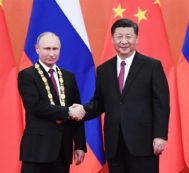
China-Russia relations gained considerable traction mid-year when Russia’s newly inaugurated “old” president embarked on his first foreign trip to China. In Beijing, the two “intimate” friends hammered out plans to elevate their already “best-ever” relationship against a backdrop of mounting pressures from the US. In Beijing, Putin became the first recipient of China’s newly created “friendship medal” before the two leaders headed for two summits: the 18th SCO Summit in Qingdao in early June and the 10th BRICS Summit in Johannesburg in July. The first major expansion of the SCO was celebrated in Qingdao with an extravaganza. In late August, Russia hosted the biannual SCO Peace-mission 2018 anti-terrorism exercise, while preparing with China, for the first time, for the Vostok series of strategic maneuvering exercises in Russia’s East Military District. Enhanced cooperation between Beijing and Moscow occurred against a backdrop of pressure from the Trump administration.
Australia-US/East Asia
September 2017 — August 2018Turnbull Tumbles, Trump Mateship, China Frost
In a week of political mayhem, Australia’s ruling Liberal Party dumped its leader, Prime Minister Malcolm Turnbull, and shunned its deputy leader, Foreign Minister Julie Bishop. While the political unrest is deeply domestic in nature, it shares one element with Australian’s foreign policy concerns – uncertainty. The Australia-US relationship under Donald Trump has been defined by what the president has NOT done to Australia. Trump hasn’t questioned the alliance; hasn’t hit Australia with trade tirades and tariffs; hasn’t broken the refugee deal he so denounced when first taking office; and hasn’t even sent an ambassador to Australia. Canberra’s softly-softly approach to Trump is to talk up the military history – “100 years of mateship” – stressing Australia is an alliance partner that doesn’t cost the US much. A major talking-point is that Australia has a trade deficit with the US. In the way that Trump defines trade relationships, the US makes a profit out of Australia. In contrast, the relationship with China has gone through an icy patch.
Regional Overview
January — April 2018The “Disruptor in Chief” Emerges
Since the advent of the Trump administration, US Asia policy has reflected more continuity than change. No more. The one exception has been US security policy, which continued to reflect time-honored principles, including the centrality of US alliances and deterrence. Changes have come at a breathtaking pace in the past few months. Credit (or blame) the emergence of “the real” Donald Trump, who has shrugged off the constraints and conventional wisdom that had kept him largely within the mainstream of US foreign policy practices. His decision to meet North Korean leader Kim Jong Un stunned most observers and led to a series of summits in anticipation of his historic meeting with Kim. The “Disruptor-in-Chief” was also hard at work on economic policy, with the imposition of tariffs on steel and aluminum exports by US trading partners. Trade tensions between Washington and Beijing grew throughout the first four months of 2018 and there are fears of a trade war in the absence of astute management.
US - Japan
January — April 2018Adjusting to Abrupt Diplomacy
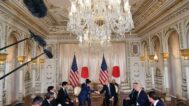
2018 brought with it a swirling series of summits, including another visit by Prime Minister Abe Shinzo to the United States to meet President Donald Trump. The year began with Japan and the United States toe-to-toe on their “maximum pressure” strategy toward North Korea. Four months later there was the announcement of a June 12 summit between Trump and North Korea’s leader Kim Jong Un. Tokyo and Washington have yet to come together on trade, and even at the Abe-Trump summit in mid-April, the differences were conspicuously on display. The US-Japan economic partnership remains a potential black hole for the alliance in the months ahead. But the action is in Northeast Asia for the moment, where everyone seems to be trying to meet with everyone. Nonetheless, Abe and Trump made clear in their summit their mutual goal has not changed: complete, verifiable, and irreversible denuclearization by North Korea.

US - China
January — April 2018Hurtling Toward a Trade War
The US and China engaged in tit-for-tat trade actions as bilateral trade talks failed to produce a compromise. The Trump administration doubled down on its characterization of China as a threat to US interests in the National Defense Strategy and “Worldwide Threats” hearings on Capitol Hill. President Trump signed the Taiwan Travel Act, which calls for the US government to encourage visits between officials from the United States and Taiwan at all levels, provoking China’s ire. Cracks in US-China cooperation on North Korea were revealed as the Trump administration imposed sanctions on Chinese shipping and trading companies allegedly conducting illicit business with North Korea, and Beijing failed to notify Washington in advance of Kim Jong Un’s visit to China. The US conducted two Freedom of Navigation Operations (FONOPS) in the South China Sea.
US - Korea
January — April 2018An Olympic Detente
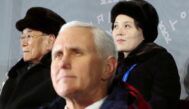
Following weapon tests and rhetorical fury in 2017, North Korean leader Kim Jong Un signaled in his New Year address a marked turn toward improving inter-Korean relations. South Korean President Moon Jae-in seized the opening, lauded Trump’s hardline, stood up military hotlines, and moved North Korea to the Olympic moment. The PyeongChang Winter Olympics, Korea’s peace games, won early gold, despite US misgivings. Sport gave way to diplomacy, as North and South Korea agreed to a summit and Seoul sent its representatives north. President Trump surprised everyone by accepting Kim’s offer to meet. Washington and Seoul vowed to maintain maximum pressure and mute Trump trade concerns. Their de facto downgrade in the size of joint military exercises demonstrated flexibility. Seoul couched the Moon-Kim summit as a preliminary to the Kim-Trump sit down. Amid concerns of a split, Moon suggested Trump receive the Nobel Peace Prize.
US - Southeast Asia
January — April 2018Policy on Auto-Pilot
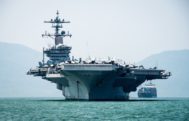
The difficulties of the Trump administration in forging a coherent foreign policy were on display in US relations with Southeast Asia in the early months of 2018. The Department of Defense played an outsized role as both Secretary of Defense James Mattis and Chairman of the Joint Chiefs of Staff Joseph Dunford made visits to the region. The customary menu of multilateral and bilateral exercises with Southeast Asian militaries, including the 37th round of the annual Cobra Gold exercises, reassured security partners of continued defense cooperation. However, piecemeal diplomatic activity by the US underscored perceptions that the Trump administration has downplayed the region’s significance, exacerbated by heightened rhetoric about the still-undefined “free and open Indo-Pacific region.” Chinese assertiveness in the South China Sea and the Rohingya refugee crisis continued to be of mutual concern, but were overshadowed by the emerging dialogue on the Korean Peninsula and growing trade tensions between China and the US, leaving Southeast Asian governments in a reactive mode.